

Screen Time and Academic Results
Dear Parents,
Imagine a student called Leo.
Leo was always a bright, curious child and an A star student. Then, over one term, his grades dropped by almost 32 percent, taking him from an A star to a C.
What had changed?
His parents had bought him an iPad.
The iPad itself was not the problem. But along with it came longer hours indoors, less sleep, less movement, less reading and, gradually, a reduced ability to focus on anything that was not immediately stimulating.
Leo is fictional, but the question behind his story is very real.
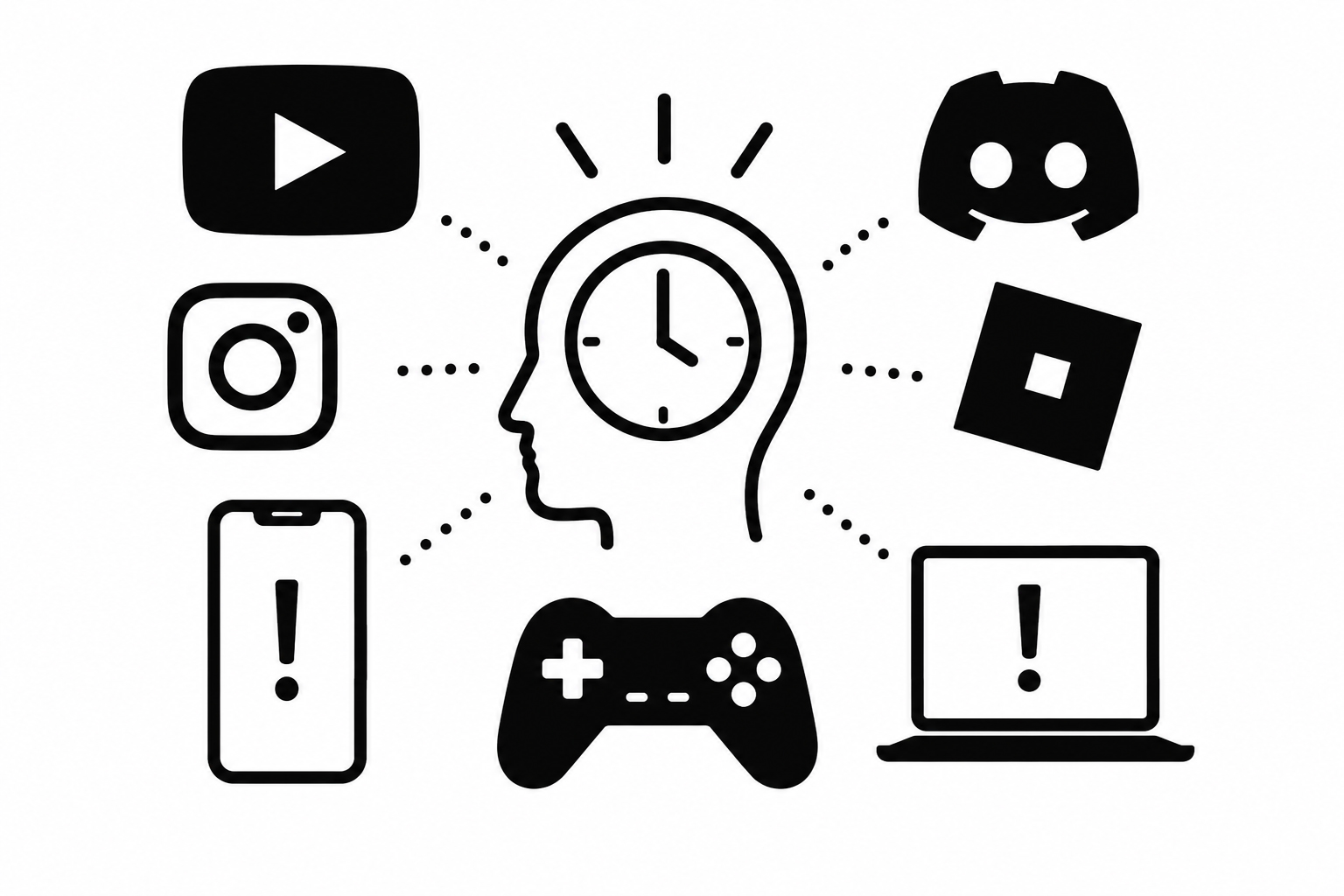
As we completed our recent Checkpoints, we began looking carefully at the patterns behind academic results. One pattern that stood out was the relationship between lower-than-usual academic performance for some students and very high levels of screen exposure.
And screen time is not the iPad alone.
It is YouTube, gaming, reels watched from a parent’s account, makeup and cooking tutorials, influencer vlogs and endless scrolling. It is also the phone that stays in the home with different adults.
When I speak to our students, I am increasingly concerned by how many children are sleeping late and arriving at school tired, restless and struggling to sustain attention.
Jonathan Haidt, in The Anxious Generation, talks about the shift from a play-based childhood to a phone-based childhood and highlights four areas that have been significantly affected: sleep, exercise, academic performance and real-world social connection. I encourage every parent to look up his book and read it.
At GGIS, we consciously try to create a different balance. Every day, we make space for meditation, movement, play, outdoor experiences, relationships and academics.
But school alone cannot counterbalance what happens during the remaining hours of the day.
This is where we need you.
Please consider not allowing Instagram or other social media accounts before the age of 16.
Please monitor not only how long your children are on screens, but what they are watching.
Please think carefully before giving a child their own smartphone.
Please establish and protect a consistent bedtime.
And please keep children away from endless, highly stimulating “brain rot” content.
Technology is not the enemy. Purposeful, monitored and balanced use can absolutely have a place in our children’s lives.
From Grades 6 to 8, we introduce our students to The Anxious Generation so that they understand what excessive technology can do to attention, relationships, sleep and childhood. In September, we will take this conversation further through our assemblies, social media initiatives and circle time.
But there is one question I want to leave with you.
Are you with us in this?
Because this cannot be a conversation only for children.
It also means something for us as adults.
If we want our children to put their phones, iPads or the TV remote down, sometimes we may have to put ours down first.
Our children learn far more from what they see us do than from what we tell them to do.
Let us work together to give our children something no algorithm can provide: the ability to focus, to sleep well, to play, to be curious, to be bored, to talk to one another and to simply be present.


